Tuesday, 4 March 2014

Edith Amituanai

Edith Amituanai is an artist based in Auckland, New Zealand. She draws upon her Samoan heritage and upbringing to create insightful documents of her friends and family through photography.

homsch-04
Liston and Massey, Edith Amituanai, 2011
Amituanai's Liston and Massey captures a fleeting moment between two Auckland school kids as their school routes intersect and they walk past one another. Both stare straight ahead and take long, measured strides as they go about their daily routines, which indicates their absolute familiarity with their surroundings. The photograph subtly invokes the 'rule of thirds', as it is can be split into the footpath, the fence and the horizon line.

Isaac before School, Edith Amituanai, 2011

Wednesday, 19 February 2014

D-D-Doris Clare Zinkeisen

Doris Zinkeisen was a Scottish artist heavily influenced by theater and costume, and was active during the roarin' 20's and 30's. Painting primarily in oils, Zinkeisen focused, (pre WWII), on the bourgeois habits of the French and English upper-class members, who seemed to be permanently riding rearing white stallions.

Lady on a White Horse, Doris Zinkeisen 
Zinkeisen's portraits however are fascinating on account of her wonderful use of lighting, while the clothes worn by her subjects have been carefully selected on account of their fabric type and texture.
 
Elsa Lanchester
Elsa Lanchester, Doris Zinkeisen

*Sass*

This portrait of actress Elsa Lancaster is painted in glowing oil paint, and is almost reminiscent of a High-Renaissance work on account of the contrast between Lancaster's skin, hair and gown. The background of the portrait is a muted warm brown, a colour that Zinkeisen has also added, (as an undercoat), to the skin and hair of the model. This ties together the painting, and enables Lancaster's skin to appear almost luminescent. 


Saturday, 15 February 2014

Catherine Murphy

Catherine Murphy is an American painter and conceptual artist, as she values and focuses deeply on the ideas surrounding her works. Murphy works primarily in oil paint, which she uses to depict photo-realistic,(fancy word for 'hey, it looks like a photo!'), paintings such as Hand Mirror. Details such as the creases in the blue fabric and folds in the hand draw the eye around the painting, while the lush colours of the work establish a vibrant spring scene. 


Hand Mirror, Catherine Murphy
Murphy is an obsessive painter/ observer, and often  keeps her work inspiration set up in (or around) her house for long periods of time, as she likes to meticulously record every detail that her subject has to offer. This is especially evident in the leaves painted in Hand Mirror, as each individual vein is painstakingly rendered.

Face Shapes, Catherine Murphy
Face Shapes emphasizes her fascination with skin, while the title of the work references the different facial structures of each human being; circle, square, triangle etc. The harsh lines of the (dry-brushed) oil paint highlights the vulnerability of the subject, who has been duly categorized by the dominant square. This painting is incredibly strong as it forces viewers to engage directly with it, and is a powerful piece of self-portraiture. 

Murphy's gaze grabs the viewer and holds their eyes until they look away.

Wednesday, 12 February 2014

B is for Bethan Huws

Moving on from crusading oils to laid-back water colours, Bethan Huws is a welsh artist who draws upon her heritage and child-hood experiences. Through subtle and controlled line-work, Huws forms abstract and ethereal shapes that hint at wispy rememberings snatched from the cobwebs of her mind.


Bethan Huws Untitled (A girl and a boy) watercolor on paper 21.0 x 29.7 cm Kunstmuseum Bern - © 2009 ProLitteris
A girl and a boy, Bethan Huws

Huws has used incredibly unsaturated paint to achieve an almost translucent medium, which she waters down further after first describing the hair and nostrils/pupils of the girl. The white space surrounding the two floating heads seems to emphasize the dream-like quality of the painting, which appears almost faded and distant.

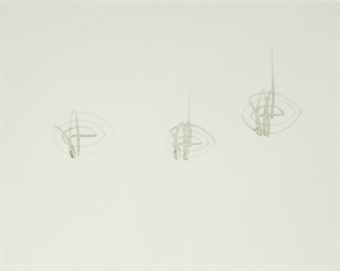
Untitled, Bethan Huws
Huws continues to use a fine tipped brush to apply watery-consistency paint, this time using it to depict the reed boats she created and played with as a child. The immediate motion expressed by the lines makes viewers more aware of their bodies, while Huws' simplistic composition cuts the painting in half, causing the audiences eyes to first visit the abstract form on the left.

Monday, 10 February 2014

The lowdown on females in fine arts

Many of you have heard of the great Italian Renaissance heroes, (Raphael, Michelangelo, Leonardo etc), and are overly familiar with images of chubby putti (or cherubs) floating dreamily around baby Jesus. Some of you may have even seen the Mona Lisa in the flesh, or been to Italy to gaze at the Sistene Chapel (and take a sneaky photo or two). I bet that not many of you know however, about the great Post-Renaissance master Artemisia Gentileschi.

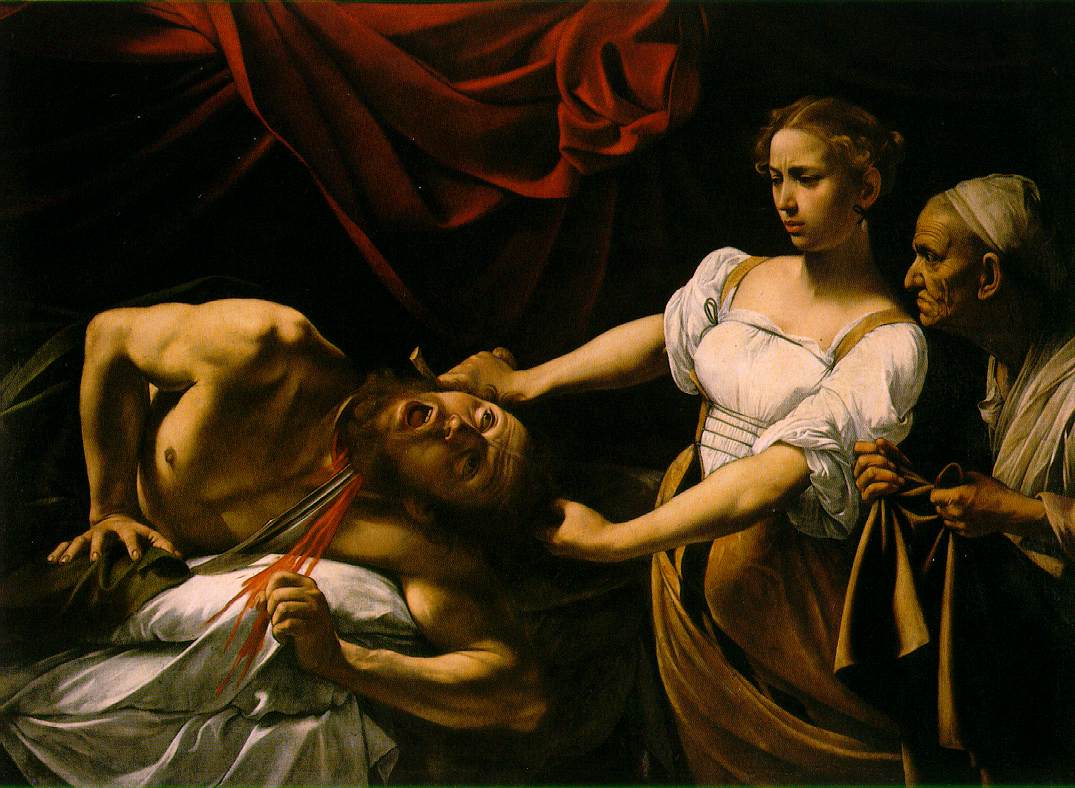
Yes, swimming against the tide of camp, tortured male souls obsessed with tiny penises, was an amazing female artist who lived in the late 1500's. Gentileschi grew up and began making works during the Baroque period, which emphasized OTT and extravagance, (think beautiful women and obscene amounts of drapery). Like her father, she was influenced heavily by Caravaggio, who painted dramatically lit/high energy oil paintings of religious subjects.

Caravaggio, Judith Beheading Holofernes. 
J"Do you think he's dead yet?"
A"My new bed sheets!"

Gentileschi's version of the painting depicts a determined and capable woman mercilessly 'slaying' Holofernes, which differs astoundingly from other artists' depictions of a frail moth-like Judith quivering with a butter knife. Her painting exudes drama, tension, and violence, and forces viewers to hear the rasp of the knife, as well as the strangled gasp of the unfortunate Holofernes. 


Artemisia Gentileschi, Judith Beheading Holofernes
J" Hold him down for me would you?"
A*rolls back sleeves*

Artemisia died in 1656, after a long and successful career as a sought after painter. Because of her focus on depicting strong female characters from the Bible, she is championed by contemporary feminists, while her painting style and technical skill is also greatly admired by art collectors/viewers today.